Early Morning: Preparation and Planning
A Puget Sound Pilot’s day often begins long before dawn. Assignments are coordinated through a 24-hour dispatch system, where pilots are matched with vessels arriving or departing ports like Seattle, Tacoma, and Anacortes.
Before boarding, pilots review:
- Weather forecasts
- Tides and currents
- Traffic conditions
- Navigation charts and hazards
They carry specialized Personal Piloting Units (PPUs) — portable computers with advanced navigation software that supplement a ship’s own systems (learn more).
Boarding and Guiding the Ship
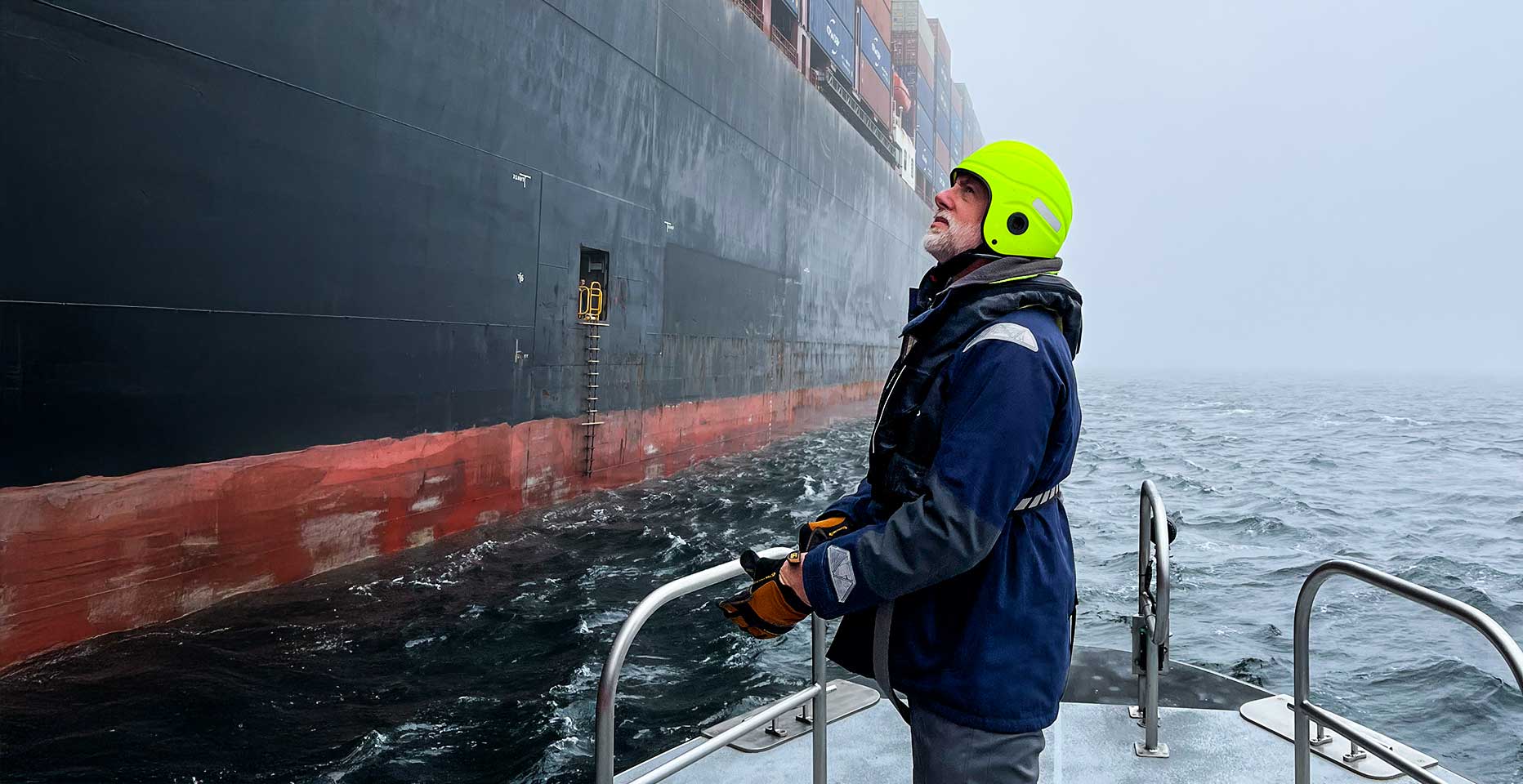
When the vessel arrives, the pilot transfers from a small pilot boat onto the moving ship, often in rough seas. Once aboard, they work directly with the ship’s master and crew to navigate through Puget Sound’s narrow, busy channels.
Their duties include:
- Communicating with Vessel Traffic Service (VTS)
- Making real-time decisions about speed, tug assistance, and course adjustments
- Ensuring compliance with safety and environmental regulations
The pilot remains onboard until the vessel is safely docked or anchored, often working 12–14 hour shifts.
“Every transit requires precision, teamwork, and deep local knowledge.”
— Puget Sound Pilots Training Division
Challenges on the Water
The work is demanding. Pilots must handle:
- Fog, high winds, and poor visibility
- Heavy commercial traffic and ferry crossings
- Environmental restrictions and shallow channels
Despite these conditions, the Puget Sound Pilots continue to operate with one of the best safety records in the nation (proof here). Their commitment ensures that maritime commerce flows smoothly while protecting Puget Sound’s delicate ecosystem.